The pilot ladder compliance database for marine pilots.
Search any vessel's deficiency history before you board. File your report by voice in under a minute.
The search you need. The tools you want.
Vessel History
Every pilot starts from scratch. Until now.
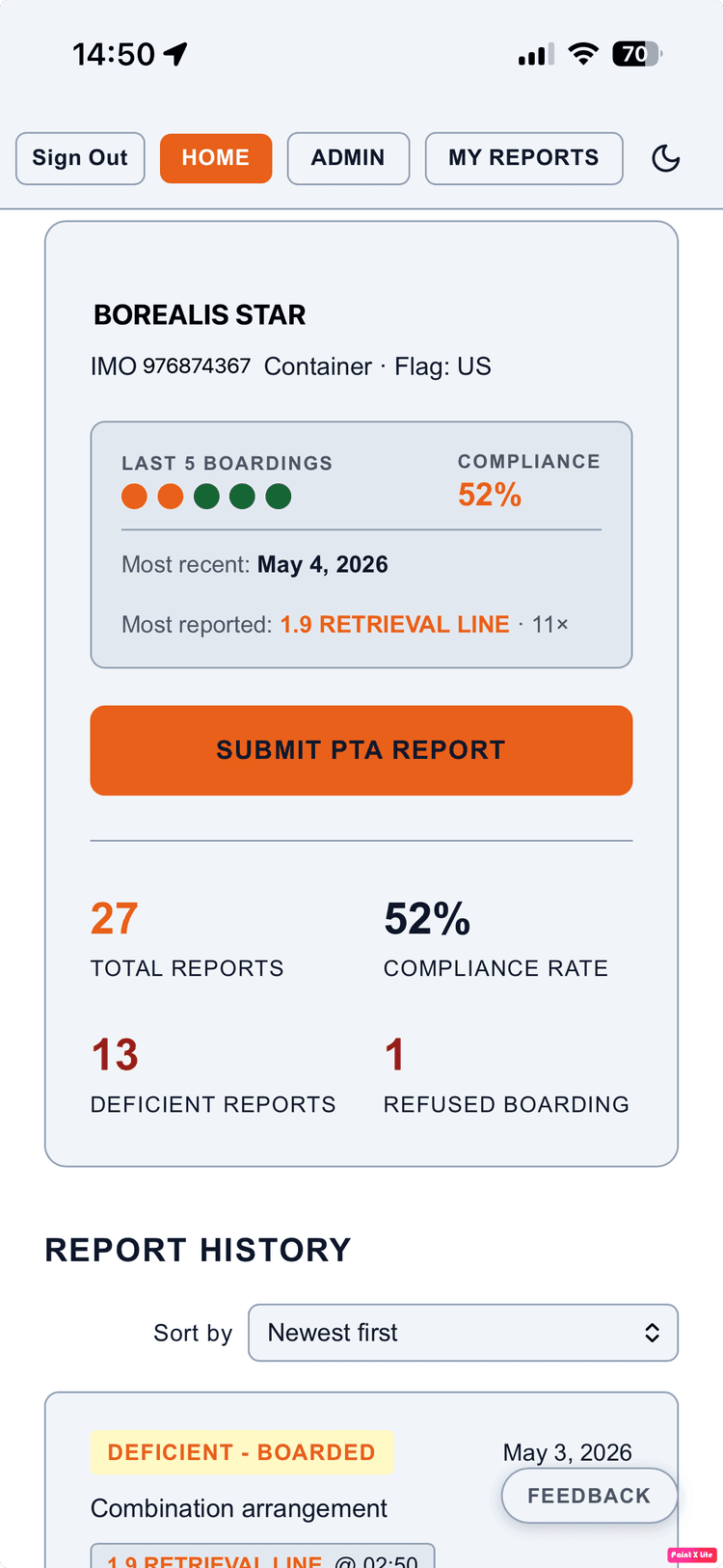
Search any vessel and see every deficiency report filed by pilots across your region, color-coded by severity, most recent first. The compliance picture is there before you leave the pilot boat cabin.
Near Miss
You handle the ship. LadderWatch handles the paperwork.
Log the close call the moment it happens, before the details fade. Reports route directly to your association, preserving the safety record without asking pilots to recreate the event later.
Voice Reporting
The report writes itself.
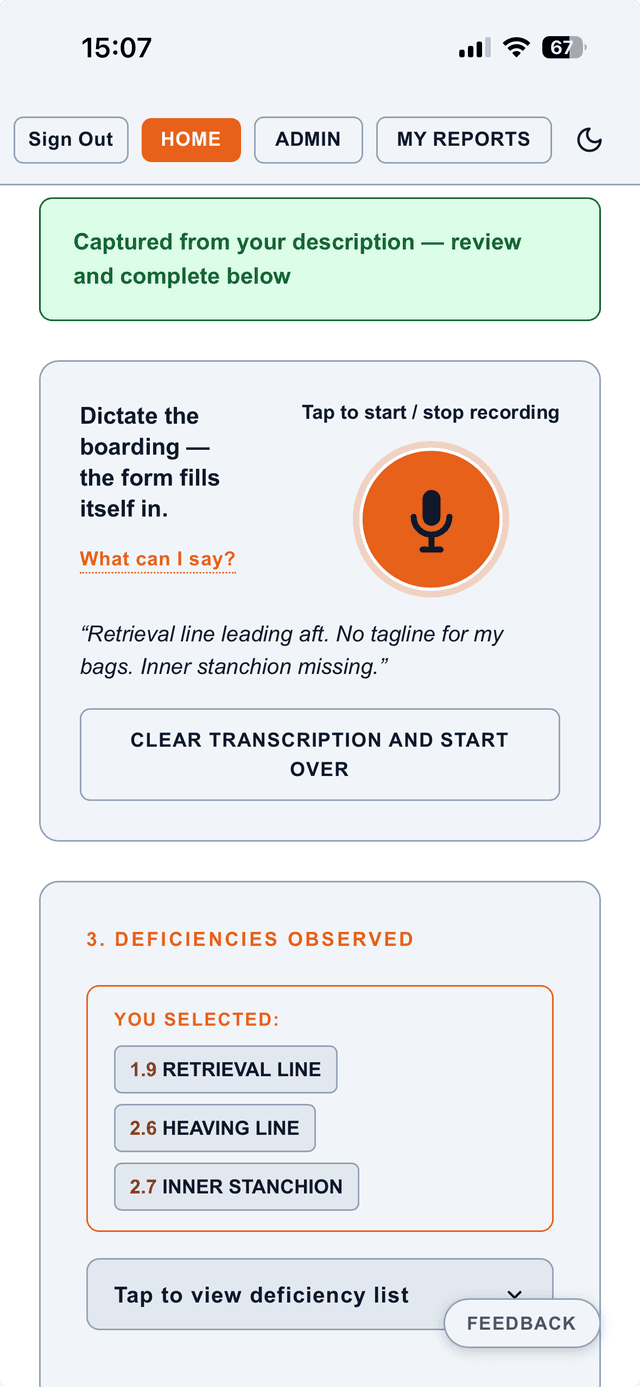
Say what you saw. LadderWatch transcribes it, identifies the deficiencies, and pre-selects the matching codes. Review and submit in under a minute. No typing, no dropdowns, no remembering codes.
Admin Portal
Still relying on spreadsheets?
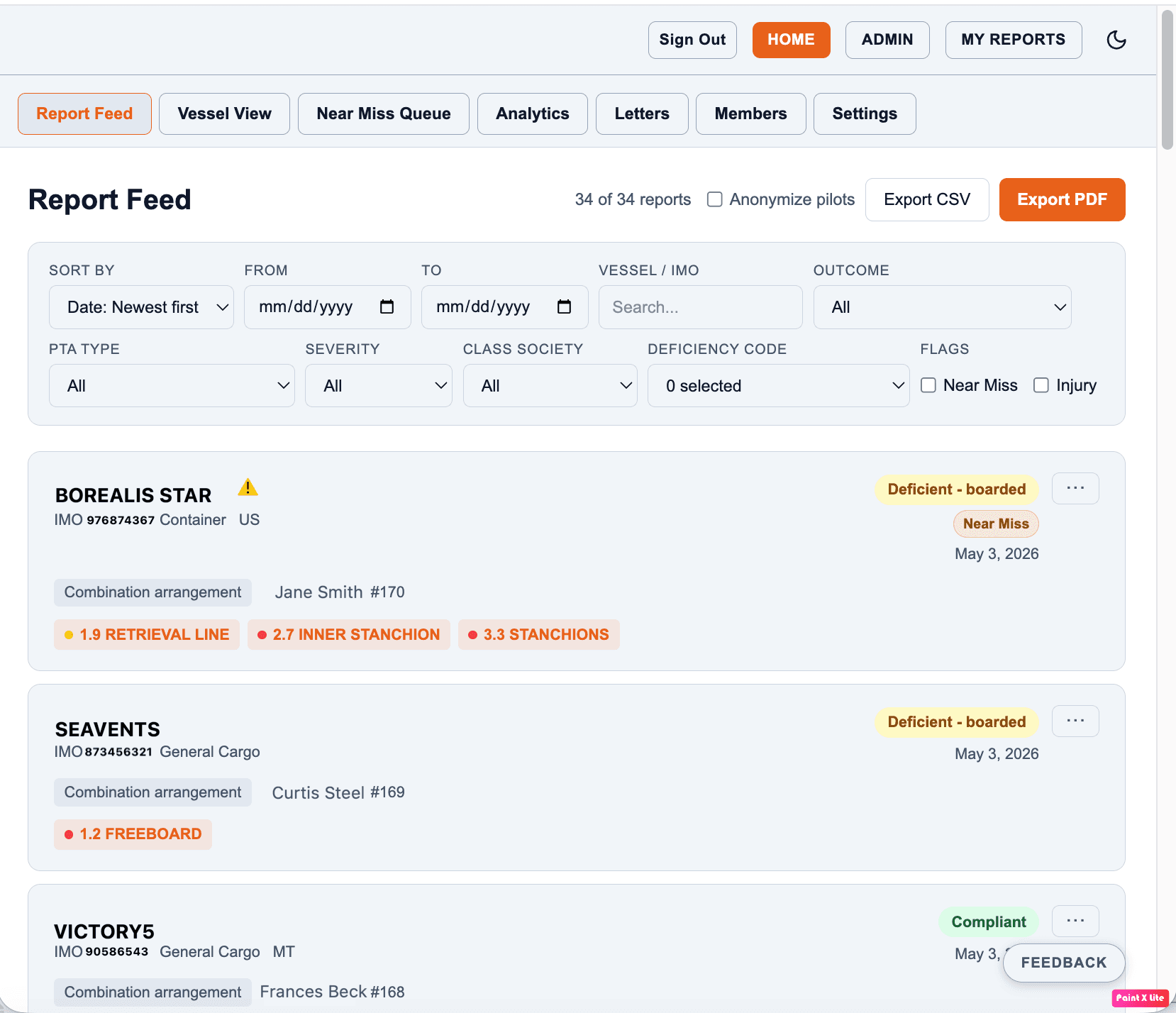
Filter reports by severity, date, or vessel. Manage near miss reports from first report to closure. Oversee your roster. No more inbox threads, no more spreadsheets.
Reliability
Built for the worst internet on Earth.
Reports save as drafts every few seconds. Photo uploads resume where they left off. A retry on a dead connection can never create a duplicate. Start a report in a dead zone and finish it when the signal returns.
Next Port Notification
Somebody boards that vessel next.
A deficient ladder does not stay in your port. It sails on to the next one. Flag the report, and your association can send a Next Port Notification letter ahead, so the pilots who board next know what is coming before the vessel ever arrives.
Search any vessel, any time.
Type a vessel name or IMO number. LadderWatch searches a database covering more than 100,000 vessels and returns the deficiency history from every pilot in the network, color-coded by severity, with the most recent boardings on top. Compliance picture in seconds, before you leave the pilot boat cabin.
Describe the boarding. The form fills itself in.
Tap the microphone. Describe what you saw on approach and after your climb in plain language. LadderWatch transcribes the audio, identifies the deficiencies you mentioned, and pre-selects the matching codes from the SOLAS-aligned taxonomy. You review, confirm, submit. No typing, no scrolling through dropdowns, no remembering codes. The boarding writes itself.
Start the report on approach. Pocket the phone, climb the ladder, bring the ship alongside. Pick it back up when there's time and dictate more. The new audio joins what's already there. Submit when the job is done. Voice transcription requires an internet connection.
Not “the pilot says so.” The regulation says so.
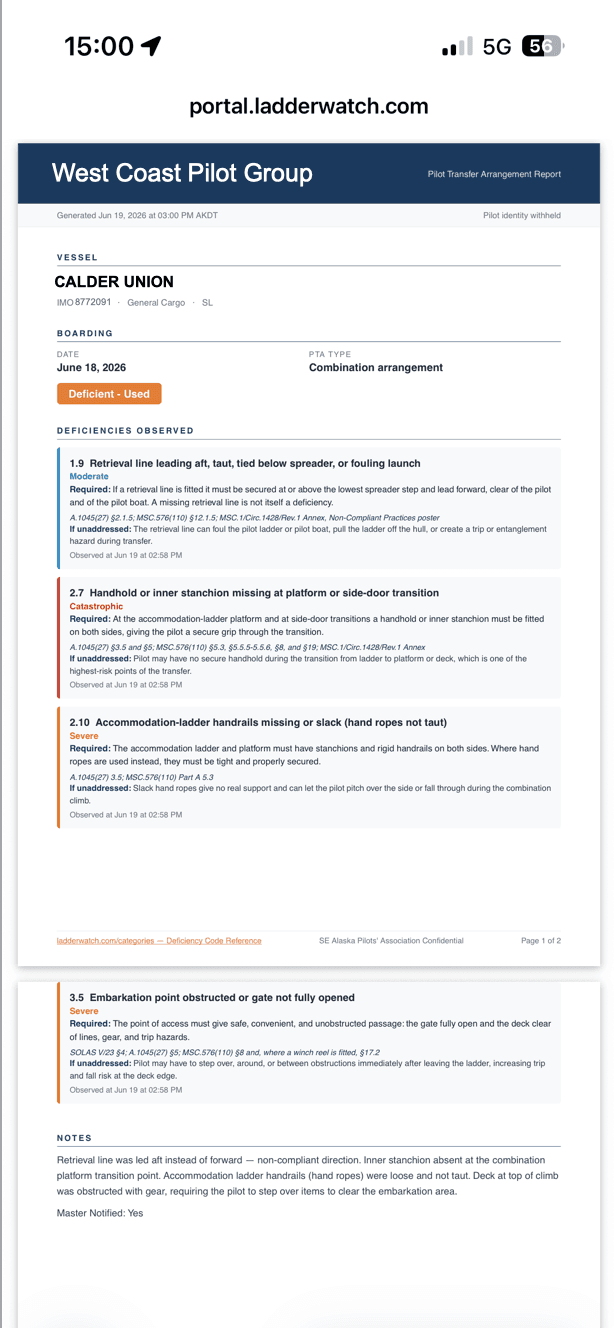
Generate a clean PDF of your report and hand it to the master or safety officer before you leave the deck. For every deficiency it sets out the exact regulation it breaks, what is required to fix it, the severity, and your photos. The ship's office gets a document it can act on and use to justify the repair to head office. Not an opinion. A citation.
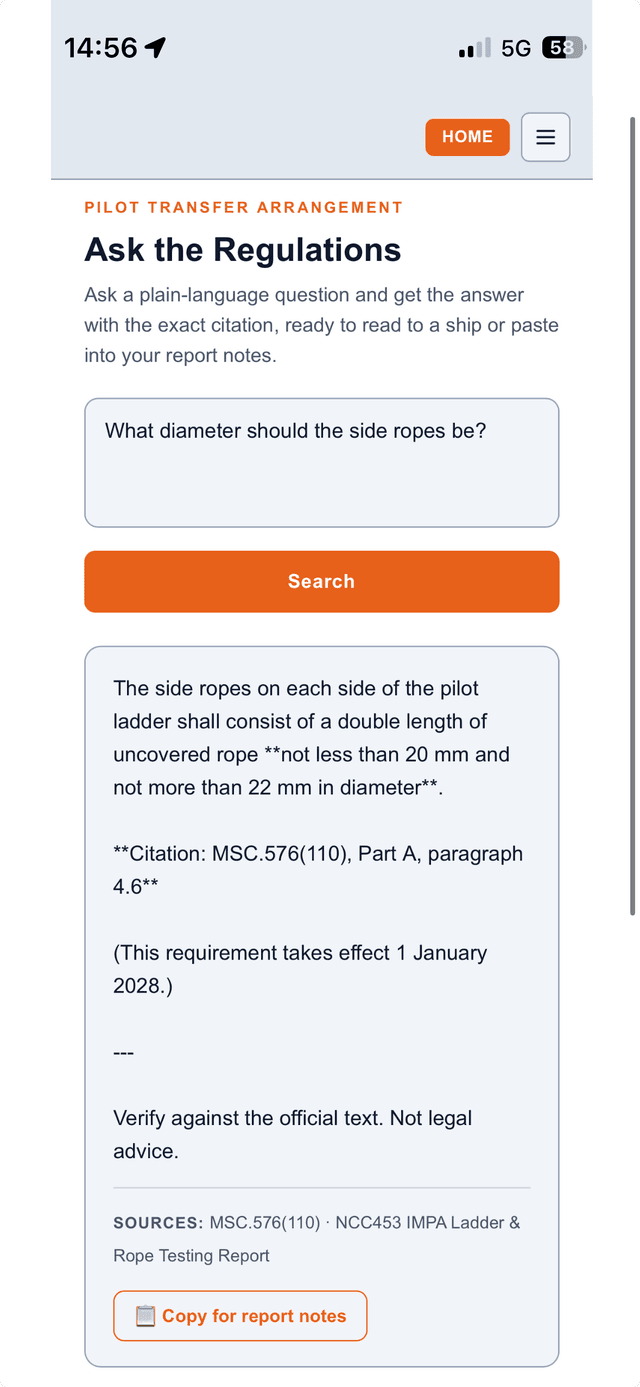
Cite the rule, not just an opinion.
Ask a regulation question in plain language and get back the exact requirement with its citation, ready to read to a ship on the spot or paste into your report. No memorizing section numbers, no thumbing through the code book on a moving deck. Ask Regs is built into the app for members.
An admin portal that runs the whole process.
Association admins get a working portal. Filter the report feed by date, severity, PTA type, or class society. Track near miss and injury reports from first report through closure, with exports ready for outside organizations requesting safety data. Anonymize pilot identities when sharing externally. Manage member rosters in one place. The spreadsheets stop here.
And when a vessel does not correct, escalate. Generate professional letters built from the vessel's actual recorded history: First Notice, Second Notice, Third Notice, and Refusal of pilotage services. When a pilot flags that the next port should be warned, generate a Next Port Notification letter so the warning arrives before the ship does.
Built by a pilot for pilots.
LadderWatch was built by a working marine pilot in Southeast Alaska who got tired of going aboard blind. There was no shared database of vessel deficiencies, no easy way to know that the ladder on the ship ahead of you had been flagged three times in the past year. Every pilot was starting from scratch, every time. And if you found something dangerous, there was no easy way to warn the pilot in the next district before they climbed the same ladder.
The mission is straightforward: make deficiency history visible and near miss reporting effortless, so that every pilot, regardless of port or association, boards with better information. A step ahead means knowing what's on that ship before the ladder is even rigged.
Try LadderWatch free for 21 days.
Full access, no credit card required.